Clean Cooking: An Overlooked Opportunity for Health, Climate and Economic Development
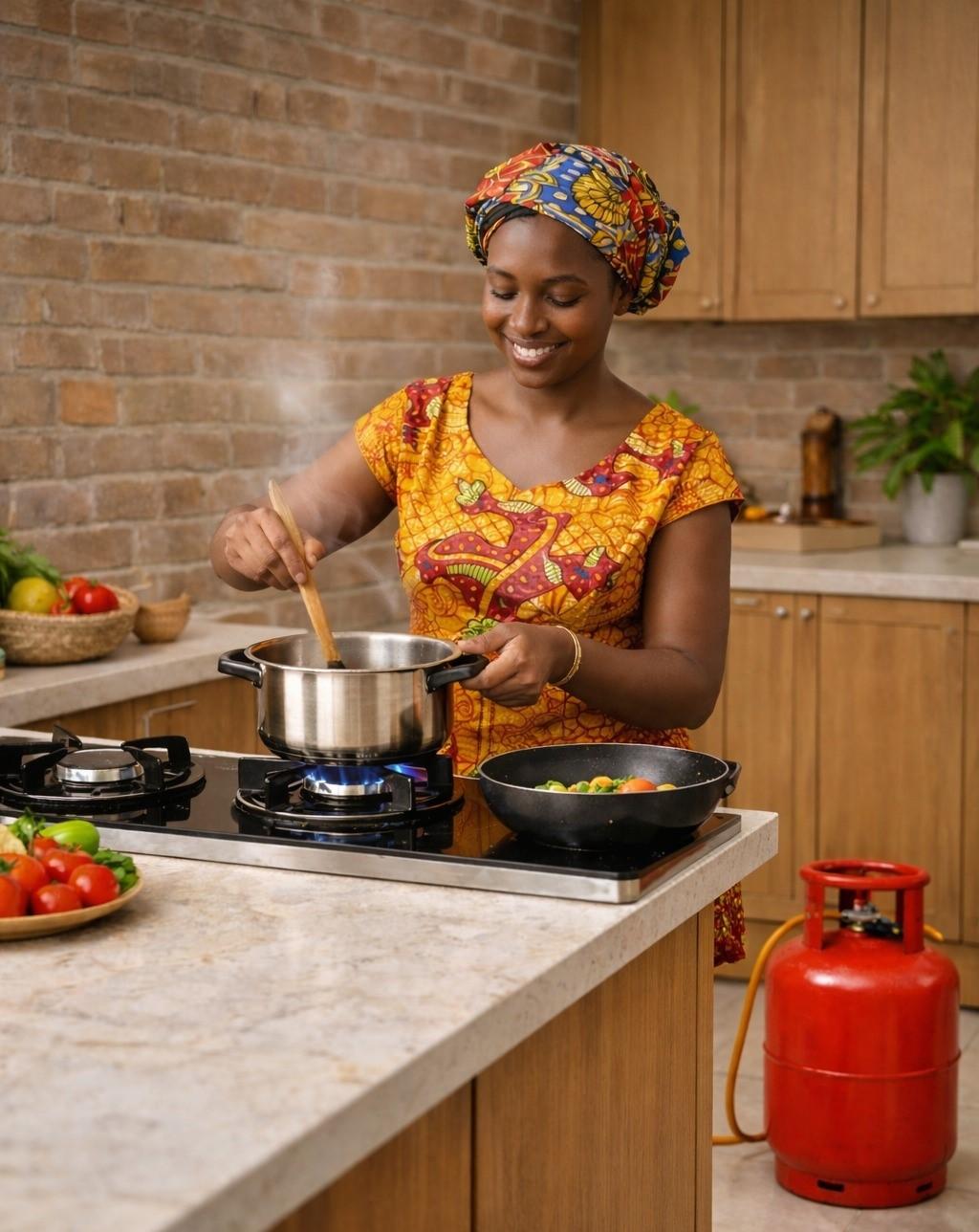
Clean cooking is one of the most under-recognised opportunities in Africa's sustainable development agenda. It sits quietly at the intersection of health, climate, gender, forests and economic growth — and yet it rarely receives the political and financial attention it deserves. That is a costly oversight.
A silent public health emergency
Cooking with charcoal, firewood and kerosene exposes millions of households — primarily women and children — to harmful levels of indoor air pollution. The World Health Organization estimates that household air pollution contributes to over half a million premature deaths in sub-Saharan Africa each year, alongside chronic respiratory and cardiovascular disease. No single health intervention reaches more people every day than the cookstove.
“If every African household cooked cleanly, we would see one of the largest health gains the continent has ever experienced — without building a single new hospital.”
Climate and forests at stake
Traditional cooking fuels are a major driver of deforestation and land degradation. They also release significant volumes of carbon dioxide, methane and black carbon — short-lived climate pollutants with an outsized warming effect. Transitioning households to cleaner fuels and more efficient stoves reduces emissions, protects landscapes and supports broader climate goals.
An economic opportunity, not a charity case
Clean cooking is too often framed as a welfare issue. It is, in fact, a substantial economic opportunity. The clean cooking market in Africa requires investment in manufacturing, distribution, fuel supply chains, financing, after-sales service and digital monitoring. Each of those layers is a source of jobs, enterprise and innovation.
Where the value chain creates jobs
- Local manufacturing and assembly of stoves and components.
- Distribution networks that reach peri-urban and rural households.
- Fuel production and supply, from LPG and ethanol to biomass pellets and electric cooking.
- Consumer finance and pay-as-you-go solutions that make appliances affordable.
- Digital monitoring, carbon measurement and verification services.
A gender and time-use revolution
Women and girls spend an enormous share of their time collecting fuel, tending fires and cooking with inefficient stoves. That time has an economic value, and it has an opportunity cost — education foregone, income not earned, leisure and rest not taken. Clean cooking returns time. Returned time becomes school attendance, enterprise, civic participation and rest.
What credible policy and programmes look like
The clean cooking transition cannot rely on stove giveaways. It requires integrated policy, durable financing, behavioural change and the kind of long-term commitment that has historically been reserved for electrification. Governments, development partners and the private sector need to align around a few practical priorities.
- National clean cooking strategies with clear targets, budgets and accountable leadership.
- Subsidy and tax design that lowers the upfront cost of clean fuels and appliances for low-income households.
- Investment frameworks that mobilise climate finance, carbon markets and concessional capital at scale.
- Behaviour-change campaigns rooted in local culture, language and cuisine.
- Robust monitoring of fuel use, emissions and health outcomes to guide policy refinement.
From overlooked to indispensable
Clean cooking should sit alongside electrification, climate adaptation and food systems as a pillar of Africa's sustainable development agenda. The technologies exist. The business models exist. What is missing is the political and institutional ambition to match the scale of the opportunity.
At Bridge Energy Solutions, we work with governments, development partners and businesses to design clean cooking programmes that deliver measurable health, climate and economic outcomes. The cookstove may be small. The opportunity is not.
Related insights
View all
Why Research Matters in Sustainable Development Projects
Successful development projects begin with understanding people, institutions, markets and local contexts. Research provides the evidence needed to make informed decisions and deliver lasting impact.

Powering Africa's Sustainable Development: Why Energy Matters Beyond Electricity
Reliable and affordable energy underpins sustainable development. This article explores how renewable energy supports agriculture, enterprise, healthcare, education and resilient communities across Africa.
Let's build the next chapter of Africa's sustainable future — together.
Partner with Bridge Energy Solutions on research, advisory and implementation across renewable energy, climate resilience and sustainable development.